Water rescue starts here
Island responders need an island rescue boat.
Water rescues are the department's most frequent call type. On busy days, the island swells to more than 3,000 people—many swimming, kayaking, paddleboarding and fishing around an island without a purpose-built local rescue boat.
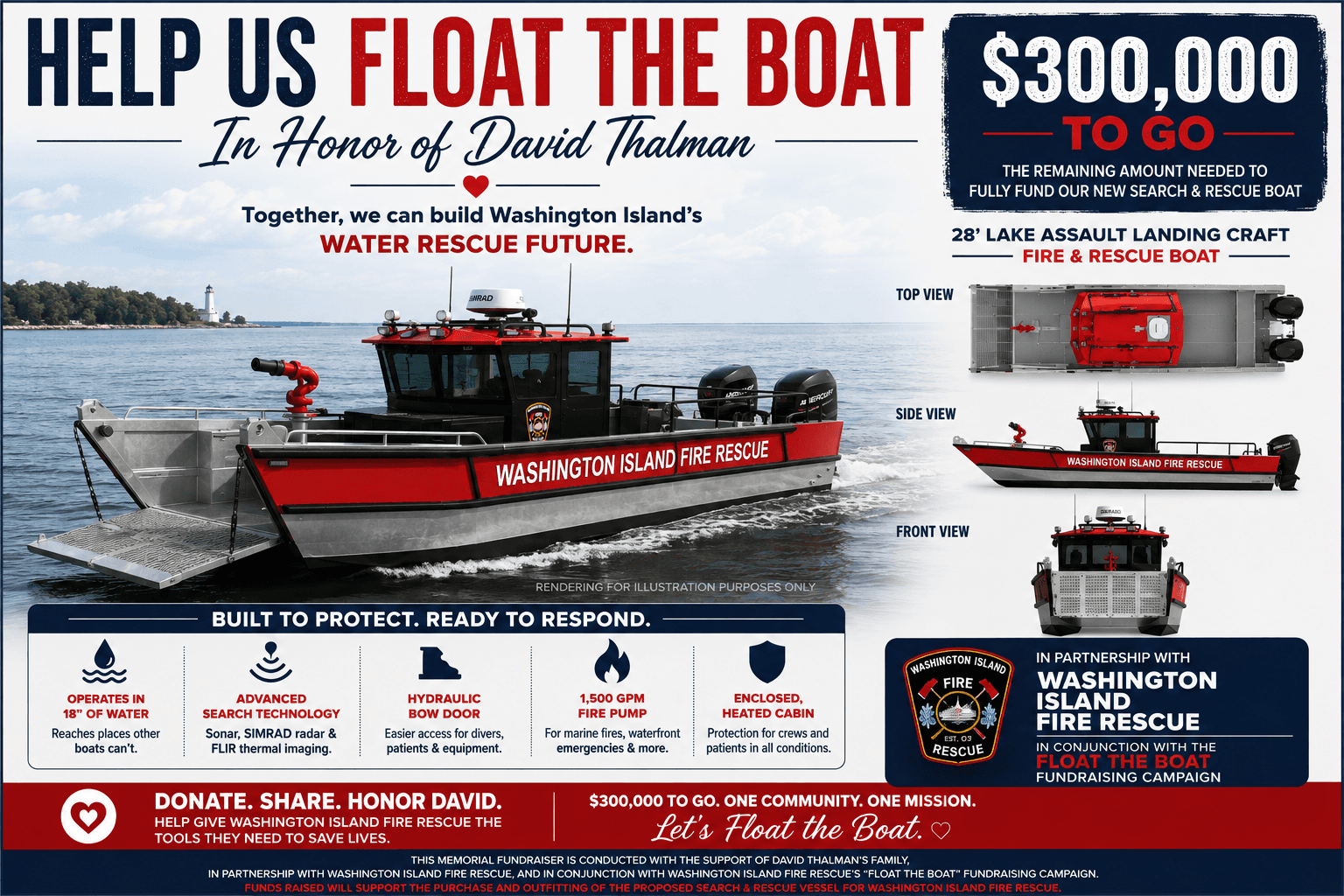
LC28-9.5-FB
28′ aluminum landing craft fire and rescue boat with a 64″ hydraulic bow door, twin 200 HP outboards and a 1,500 GPM fire pump.
Help us Float the Boat
Built around the mission
The landing-craft bow creates direct access at the waterline. Swimmer grab rails and an integrated diver ladder support recovery, while self-bailing decks and three bilge pumps are designed for work on the water.
More people on and around the water means more opportunities for emergencies. The proposed vessel gives island responders the right platform for the calls they handle most.
Its onboard pump and deck monitor add 1,500 GPM firefighting capability, and the walk-around pilothouse gives the crew a protected operating space.
The department currently leases a 24′ coastal fishing boat. Its high sides make pulling a person aboard difficult—and dangerous in rough water—according to the department president in WBAY's August 2026 report.
Why now
Record water calls.Inadequate equipment.
Washington Island sits across Death's Door, surrounded by waters known for dangerous conditions and a deep shipwreck history. The department has responded to a record number of water emergencies in 2026 using a leased 24′ fishing boat.
On August 1, two 20-year-olds left in a kayak and did not return. Bad weather and inadequate equipment contributed to a two-day recovery. David Thalman's family then asked Washington Island Fire Rescue Inc to partner on the memorial search and rescue boat campaign.
Current campaign
$250,000 raised toward $550,000
Washington Island Fire Rescue Inc began the boat campaign in 2022 after years of recognized need. Current campaign materials report $300,000 remains to fully fund the vessel.
Foundation and charity outreach
Washington Island Fire Rescue Inc and the David Thalman campaign are working with charitable and grant foundations and welcome additional partners to help close the gap.
Official model gallery
The LC28-9.5-FB in action.
Lake Assault's official model page confirms the planned 28′ × 9.5′ landing-craft platform, hydraulic bow door, twin 200 HP outboards, and 1,500 GPM fire pump.
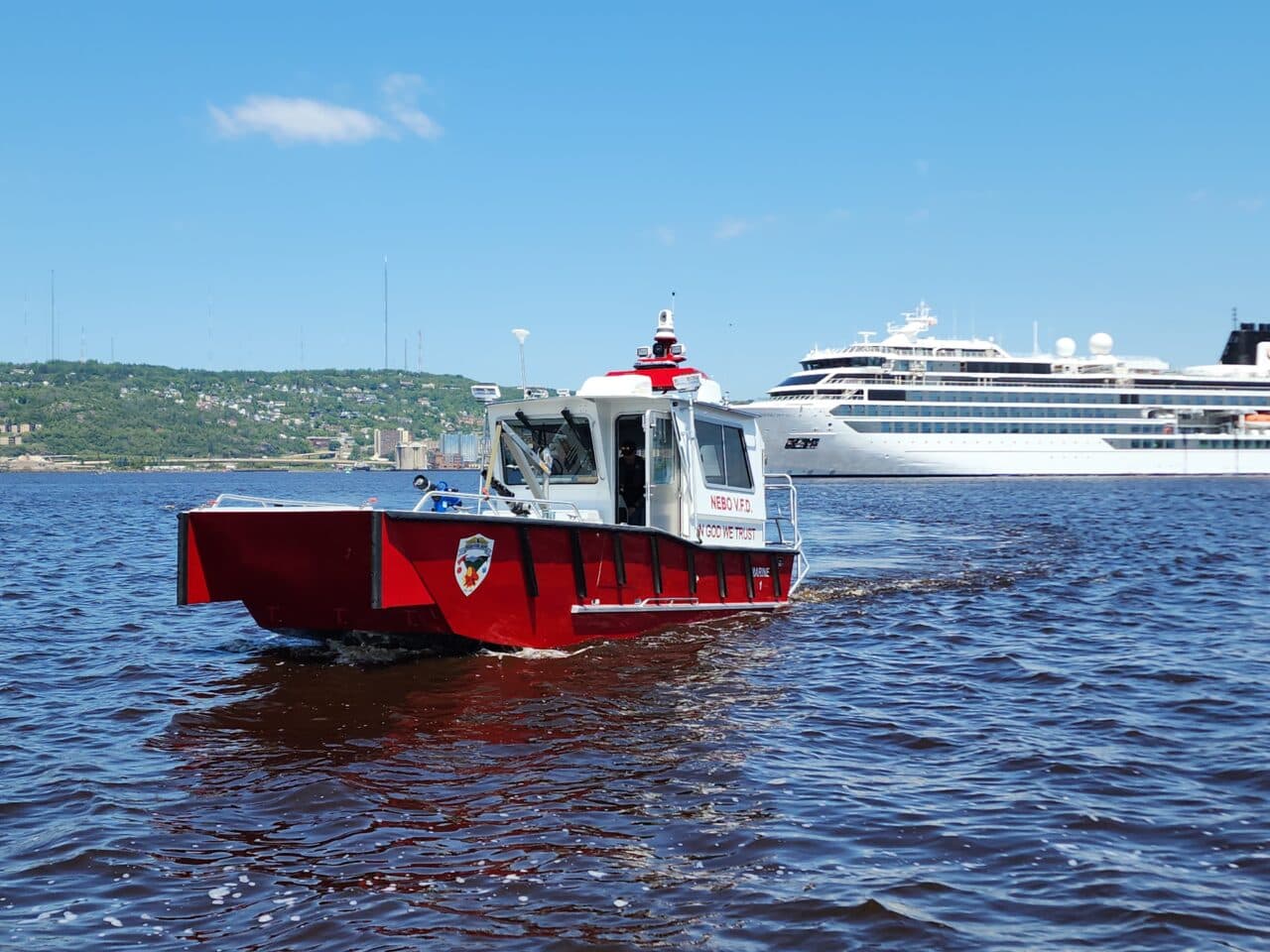
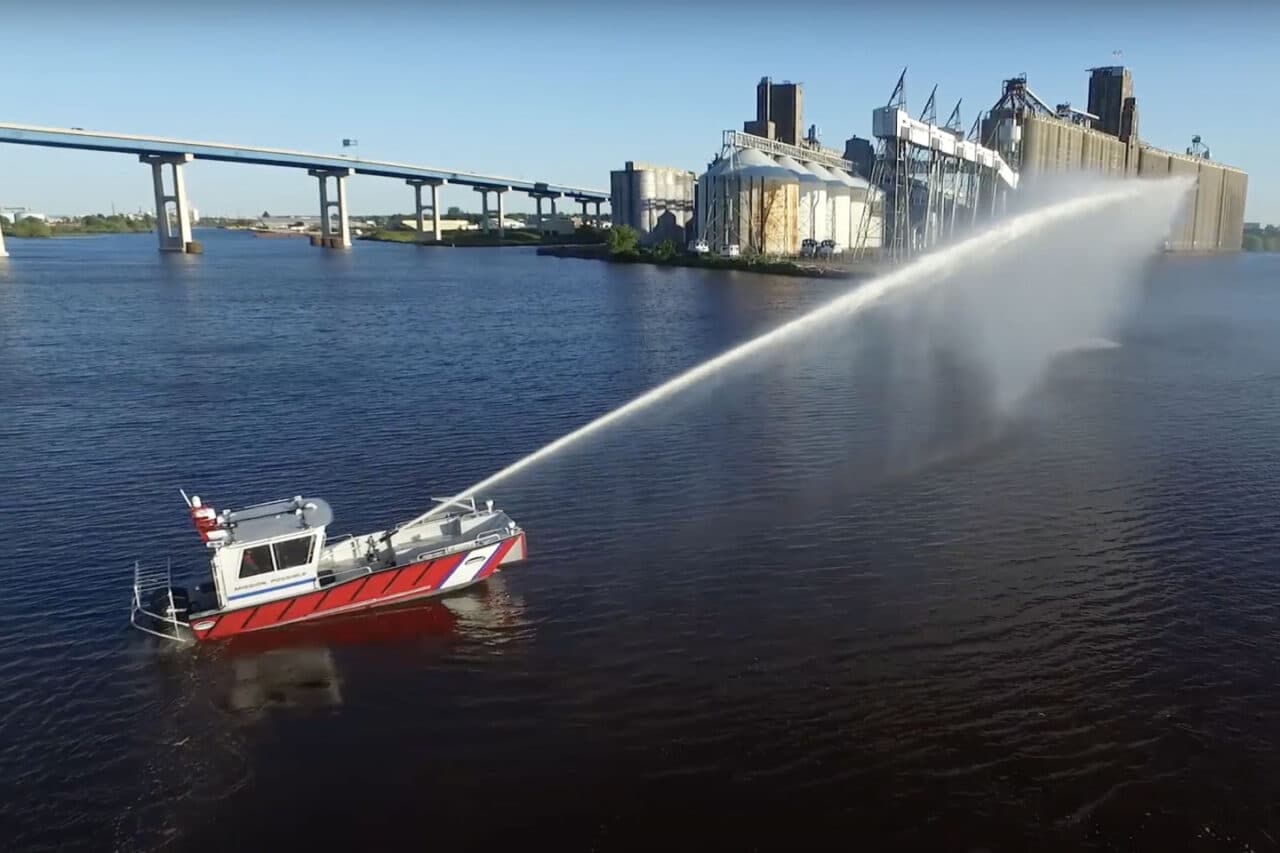
Official Lake Assault model imagery. Completed boats shown use configurations for other departments; Washington Island colors and final selected options may differ.
View manufacturer model page ↗Lake Assault LC28-9.5-FB
Rescue capability at a glance
A shallow-draft landing craft configured for water rescue, shoreline access and high-volume firefighting.
- Hull
- 28′ × 9′6″
- Marine-grade aluminum, modified-V hull
- Person + cargo capacity
- 3,500 lb
- Published combined capacity
- Fire pump
- 1,500 GPM
- Rated at 150 PSI
- Propulsion
- Twin 200 HP
- Four-stroke outboards
- Shallow-water draft
- ≤18″
- Motors up; 24″ with motors down
Full specifications
Open each section to review the published vessel details.
Hull, capacity & dimensionsThe vessel’s published hull geometry, capacity and weights.
- Hull length
- 28′
- Beam
- 9′6″
- Draft
- 18″ or less with motors up; 24″ with motors down
- Person + cargo capacity
- 3,500 lb
- Approximate boat weight
- 9,100 lb
- Approximate trailer weight
- 2,400 lb
- Approximate combined weight
- 11,500 lb
- Hull form
- Modified-V with 16-degree deadrise
- Construction
- Marine-grade aluminum
- Fuel capacity
- 150 gallons
Rescue access & deck safetyPurpose-built access for shore approaches, diver recovery and work on deck.
- Bow door
- 64″ hydraulic door opening to 90 degrees, with manual bypass
- Bow door features
- Integrated diver ladder and flat ATV tread
- Water access
- Swimmer grab rails
- Decks
- Self-bailing
- Bilge pumps
- Three 2,000 GPH pumps
Propulsion & firefightingIndependent propulsion and high-volume onboard water delivery equipment.
- Outboards
- Twin four-stroke 200 HP outboards
- Pump engine
- 8-cylinder marinized GM gasoline engine
- Pump rating
- 1,500 GPM at 150 PSI
- Water intake
- Through-hull 6″ sea chest
- Deck monitor
- 1,500 GPM
- Pump protection
- Winterization and freshwater flush
Pilothouse, navigation & lightingProtected operating space, integrated navigation electronics and scene visibility.
- Pilothouse
- Walk-around 60″ pilothouse
- Interior clearance
- 76″
- Navigation display
- Garmin 12″ touchscreen GPS, sonar, SideVu, DownVu and chartplotter
- Emergency lighting
- Red emergency lightbar
- Work lighting
- Scene and walkway lighting
Electrical & transportOnboard power systems and a purpose-matched road trailer.
- Electrical systems
- 12VDC and 120VAC
- Batteries
- Four
- Shore power
- 30A
- Trailer
- Tandem axle aluminum trailer with electric brakes
Regional response context
A local boat closes the response gap.
Coast Guard support remains essential, but year-round assets are not based on Washington Island. Before regional help can arrive, it must be dispatched, launched, and travel from the mainland. In a cold-water emergency, that means the first critical minutes pass before outside help is even on scene. A locally based rescue boat lets island responders begin the mission during that unavoidable gap.
More than half
of the department's calls in recent years involved water rescue, according to WBAY's August 2026 reporting.
About 45 minutes
for outside marine assistance even in good weather, as reported by the department president.
Start here
Local responders can launch from the island instead of waiting to begin while distant resources are still en route.
The response gap is exactly why this boat is essential.
It puts a purpose-built water-rescue platform where the call begins, giving island responders the ability to start search, recovery, patient access, and marine firefighting immediately. It complements the Coast Guard—it does not replace it—and lets the local crew work while regional resources are still being dispatched and traveling.
Door County MABAS
Mutual aid works both ways.
Washington Island responders also provide mutual aid to departments on the Door County peninsula. A published 2025 county snapshot records seven mutual-aid responses given by Washington Island. When requested and available, the proposed boat can extend that regional partnership onto the water.
Read the Door County mutual-aid report ↗Swipe map horizontally to explore
Straight-line travel math—not agency response estimates, navigation routes, or arrival-time guarantees.
- Washington IslandLocal response pointLocal launch avoids mainland travel timeSeasonal Coast Guard availability varies
- Station Sturgeon BayApproximately 35 nautical milesTravel math: about 70 minutes at 30 knotsStraight-line calculation after launch; not a response promise
- Green BayApproximately 69 nautical milesTravel math: about 2 hours 18 minutes at 30 knotsStraight-line calculation after launch; not a response promise
- Air Station Traverse CityApproximately 67 nautical milesAirborne travel math: about 24 minutes at 170 knotsStraight-line calculation after launch; not a response promise
Published-speed calculations: Coast Guard RB-M cruise speed of 30 knots and MH-60T cruise speed of 170 knots. Dispatch, crew readiness, launch, routing, weather, and sea conditions add time. Coordinates used for plotting: Washington Island 45.376991, −86.896362; Station Sturgeon Bay approximately 44.899, −87.367; Green Bay approximately 44.5367, −88.0042; Air Station Traverse City 44.74833, −85.58083.
Published sources
Vessel facts, travel-speed inputs, and regional context are drawn from the manufacturer, United States Coast Guard, and attributed local reporting.
- Lake Assault LC28-9.5-FB product page ↗Manufacturer model overview and key features
- Lake Assault specification sheet (PDF) ↗Official detailed specifications and drawing
- Coast Guard Station Sturgeon Bay ↗Parent unit and Washington Island seasonal operation
- Coast Guard Air Station Traverse City ↗Official area of operations
- Coast Guard MH-60T profile ↗Published aircraft cruise speed
- Coast Guard Response Boat-Medium profile ↗Published 30-knot cruise speed
- WBAY water-rescue reporting ↗Current vessel limitations, call demand and mainland response context
- Door County mutual-aid reporting ↗2025 MABAS responses given and received by department